Home » News » The DEA Papers: No.2 – Blended Transitions
In this second DEA Paper, Dr Ann Nevile presents evidence showing that employment should be understood as a pathway, rather than a series of disconnected service episodes.
Participants often move between NDIS supports, IEA supports, work experience, supported employment, open employment and on-going support arrangements. The critical factor is whether these movements preserve momentum or disrupt it. Relationships play a vital role in creating pathways that preserve momentum and strong relationships are what makes information sharing, co-ordination and collaboration possible.
The current design and administration of NDIS employment funding creates uncertainty that undermines the development of holistic, person-centred pathways. This uncertainty affects participants, but it also affects provider behaviour. When funding is unpredictable, it becomes more difficult to invest in employment capability, sustain specialist staff and develop integrated pathways that span multiple systems.
The Paper’s recommendations are designed to remove barriers and reduce uncertainty so that service providers are better equipped to assist people with disability and the businesses who employ them.
About the DEA Papers
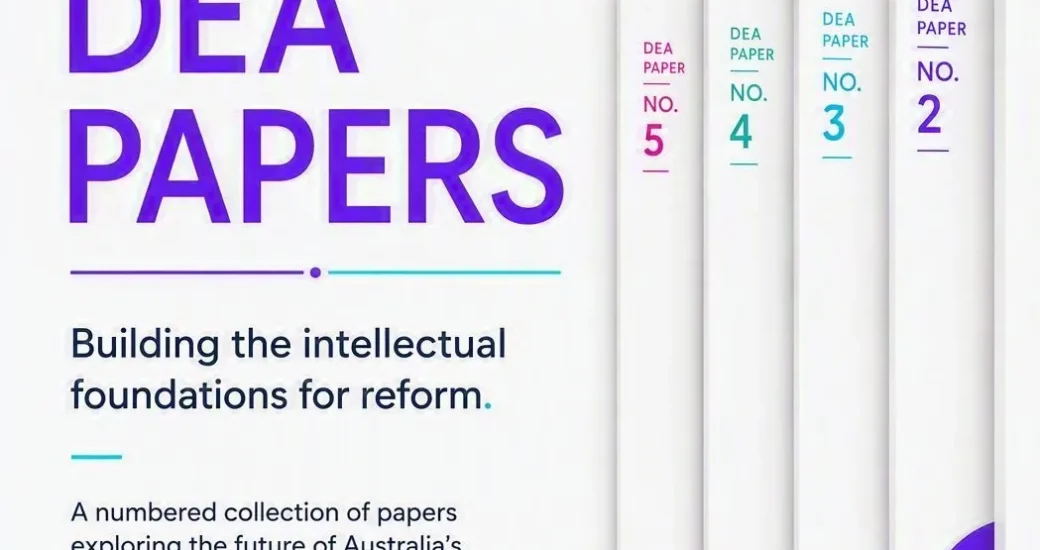
The DEA Papers are a growing series of policy and thought-leadership papers exploring disability employment through the lens of systems, architecture, and economic participation. Each paper examines a specific issue, while contributing to a broader body of work that seeks to understand how Australia’s disability employment ecosystem works and how it can be improved.
The papers are designed to build on one another. As the series grows, each paper adds to a developing understanding of the forces shaping disability employment and the reforms required to improve outcomes for people with disability.
BECOME A MEMBER TODAY
Quisque efficitur ullamcorper erat at viverra. Nunc non urna elit. Cras ipsum augue, finibus sit amet commodo nec, porta vel augue. Morbi porta sit amet felis id accumsan.




In this second DEA Paper, Dr Ann Nevile presents evidence showing that employment should be understood as a pathway, rather than a series of disconnected service episodes.
Participants often move between NDIS supports, IEA supports, work experience, supported employment, open employment and on-going support arrangements. The critical factor is whether these movements preserve momentum or disrupt it. Relationships play a vital role in creating pathways that preserve momentum and strong relationships are what makes information sharing, co-ordination and collaboration possible.
The current design and administration of NDIS employment funding creates uncertainty that undermines the development of holistic, person-centred pathways. This uncertainty affects participants, but it also affects provider behaviour. When funding is unpredictable, it becomes more difficult to invest in employment capability, sustain specialist staff and develop integrated pathways that span multiple systems.
The Paper’s recommendations are designed to remove barriers and reduce uncertainty so that service providers are better equipped to assist people with disability and the businesses who employ them.
Read the paper: Blended Transitions – Making NDIS and IEA Work Better Together
Watch the webinar
Read the webinar transcript
Our thanks to the Centre for Inclusive Employment for funding this project.
About the DEA Papers
The DEA Papers are a growing series of policy and thought-leadership papers exploring disability employment through the lens of systems, architecture, and economic participation. Each paper examines a specific issue, while contributing to a broader body of work that seeks to understand how Australia’s disability employment ecosystem works and how it can be improved.
The papers are designed to build on one another. As the series grows, each paper adds to a developing understanding of the forces shaping disability employment and the reforms required to improve outcomes for people with disability.