

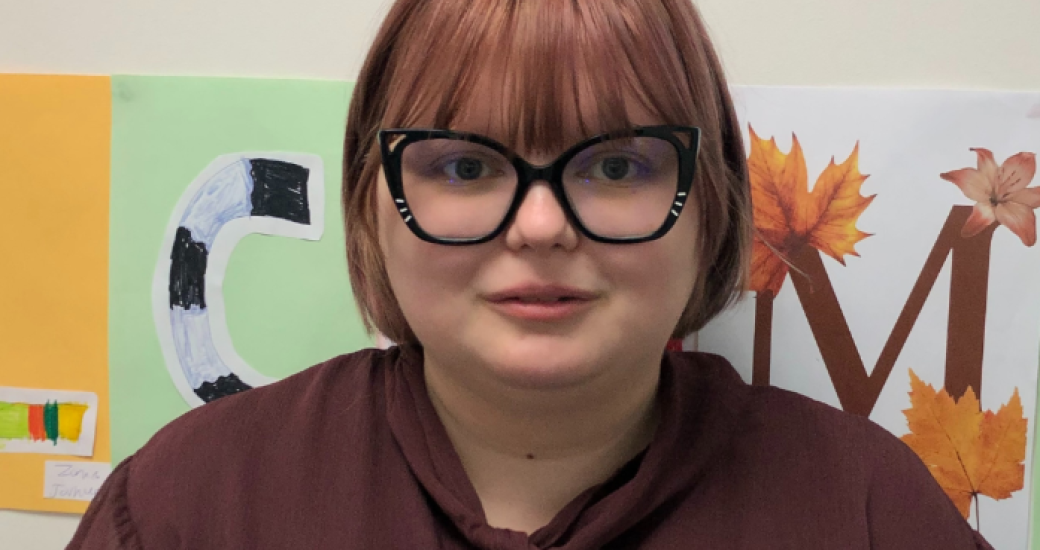

Before joining Jigsaw, Alex – now a trainee in Jigsaw’s Adelaide hub – had become disheartened with their high school’s flexible learning program. Large mixed cohorts, limited resources, and inconsistent support left them feeling overwhelmed, frustrated, and without the guidance they needed to succeed.
“I basically kind of gave up… because no one was actually helping. We had 1 teacher, and 3 case workers who didn’t actually know the material we were being taught and the teacher was always off dealing with other students,” said Alex.
“I came into Jigsaw with little expectation and not much hope, but I’ve realised that it’s very different here. It has been much better, because I actually have people to rely on.”
Alex was relieved to find the support they were looking for at Jigsaw – personalised training, guidance, and a team invested in their success. Now, they’re working towards a career as a librarian, building the skills they’ll need to thrive and, for the first time, following a clear pathway to get there.
Alex’s work experience at Jigsaw will prepare them well for a job as a librarian, with transferable skills and work experience that relate closely to their chosen career path.
“The skills that will be most helpful are attention to detail and being able to manage my time effectively, because you’re doing a lot of different tasks. At a library, there’s a lot of technology and data work, so these skills will be really useful,” said Alex.
Beyond the technical skills, Alex is most proud of the confidence they have gained during their time at Jigsaw – something that they see as just as important for their future career. These experiences are giving them both the practical knowledge and the self-assurance they need to step into a library role and thrive.
Alex’s time at Jigsaw is preparing them for mainstream employment, but it’s also giving them a deeper understanding of how underemployment among people with disability isn’t just about individuals being job-ready – it also depends on workplaces and employers creating an environment where people can succeed.
“My message would be to really think about us,” Alex said. “Step into our shoes and see what it’s actually like – imagine the impact of loud noises, bright lights, or inaccessible spaces.
Think about what it would be like to navigate a workplace like this every day. People need access, and there are definitely improvements every mainstream business can make to be more inclusive.”
